Simplifying A Complex R&D Tax Credit Workflow Into A Scalable Operations Platform
Royse Partners helps companies claim R&D Tax Credits, enabling businesses to recover significant tax savings from innovation-related activities.
Behind every claim lies a highly complex operational process involving document collection, payroll analysis, project qualification, employee interviews, quality reviews, and audit-ready reporting. As Royse expanded, the existing workflow became increasingly difficult to manage across teams. Critical information was spread across spreadsheets, emails, folders, and manual trackers, making it challenging to maintain visibility and consistency across engagements.
My goal was to transform this fragmented process into a centralized product experience that could support internal teams, clients, and consultants throughout the entire lifecycle of an R&D Tax Credit study.
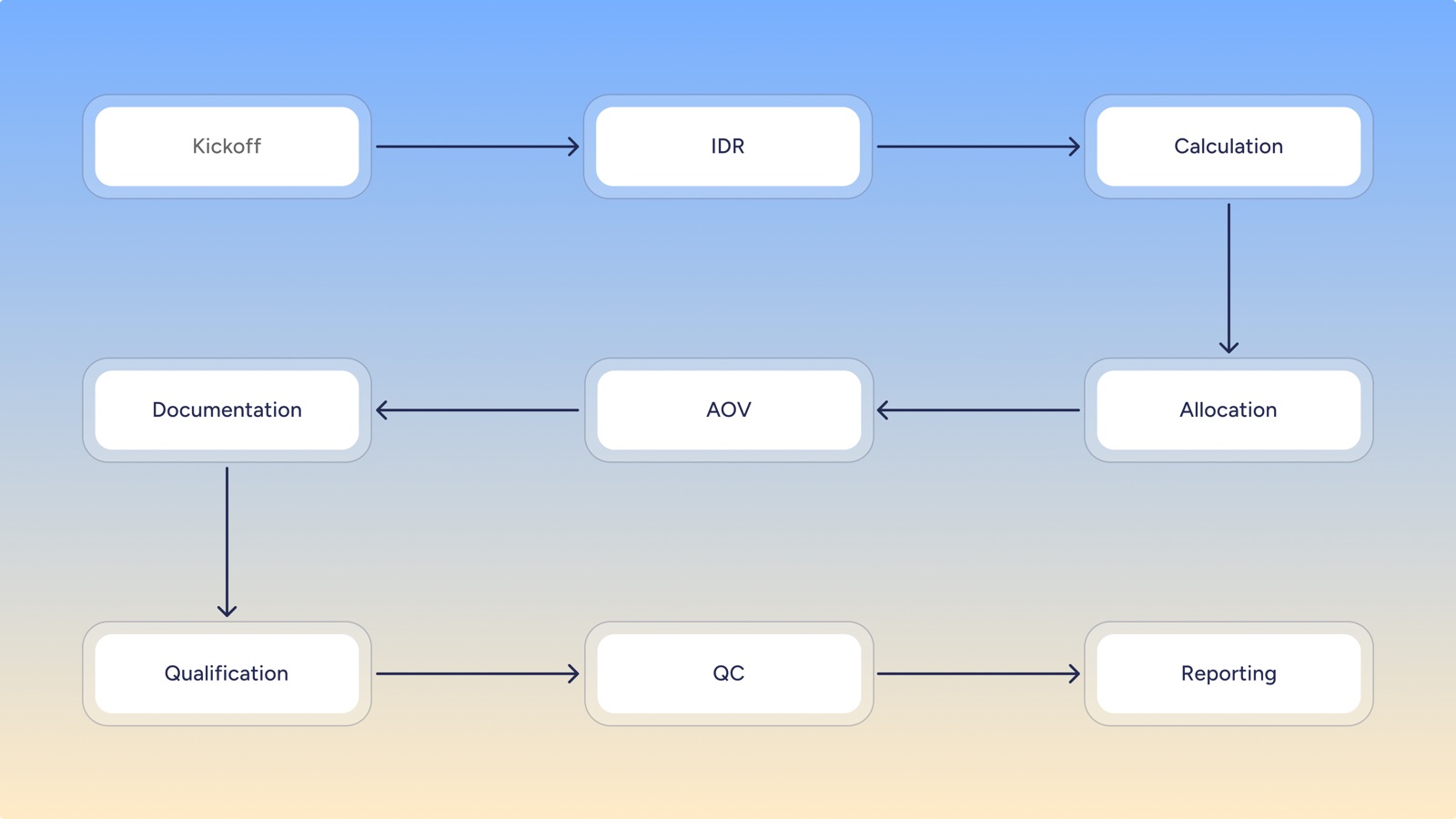
An R&D Tax Credit engagement is not a simple workflow.
Each engagement moves through a structured 10-stage process spanning two major phases.
- Kickoff
- Initial Data Request
- Preliminary Credit Calculation
- Employee Allocation
- Assessment of Value
- Detailed Documentation Collection
- Project Qualification
- Quality Control Review
- Filing Deliverables
- Final Substantiation Report
Every stage introduces new stakeholders, dependencies, documentation requirements, and decision points. The challenge wasn't simply designing new screens.
The challenge was designing clarity for a highly specialized process.
Uncovering Complexity Beneath the Workflow
Before jumping into wireframes, I spent time understanding how Royse's operations team conducted studies from initial client onboarding to final delivery. I analyzed the complete operational workflow, stakeholder responsibilities, documentation requirements, and handoff points between teams.
What quickly became apparent was that the biggest problem wasn't functionality.
It was context.
Every stakeholder needed different information at different moments in the engagement lifecycle.
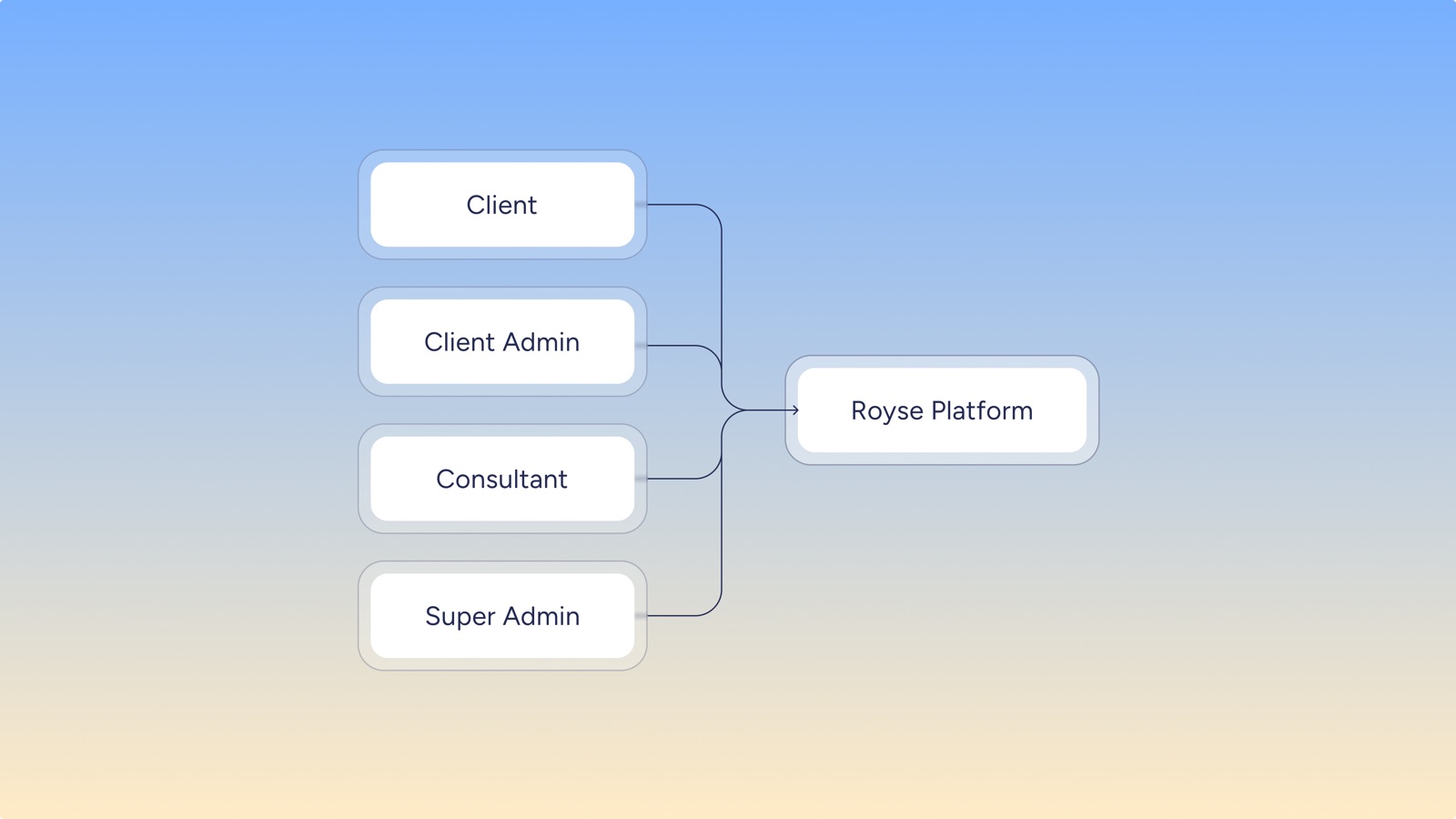
The product needed to support multiple stakeholder groups, maintain audit readiness, and accommodate a highly regulated workflow without disrupting existing operational processes.



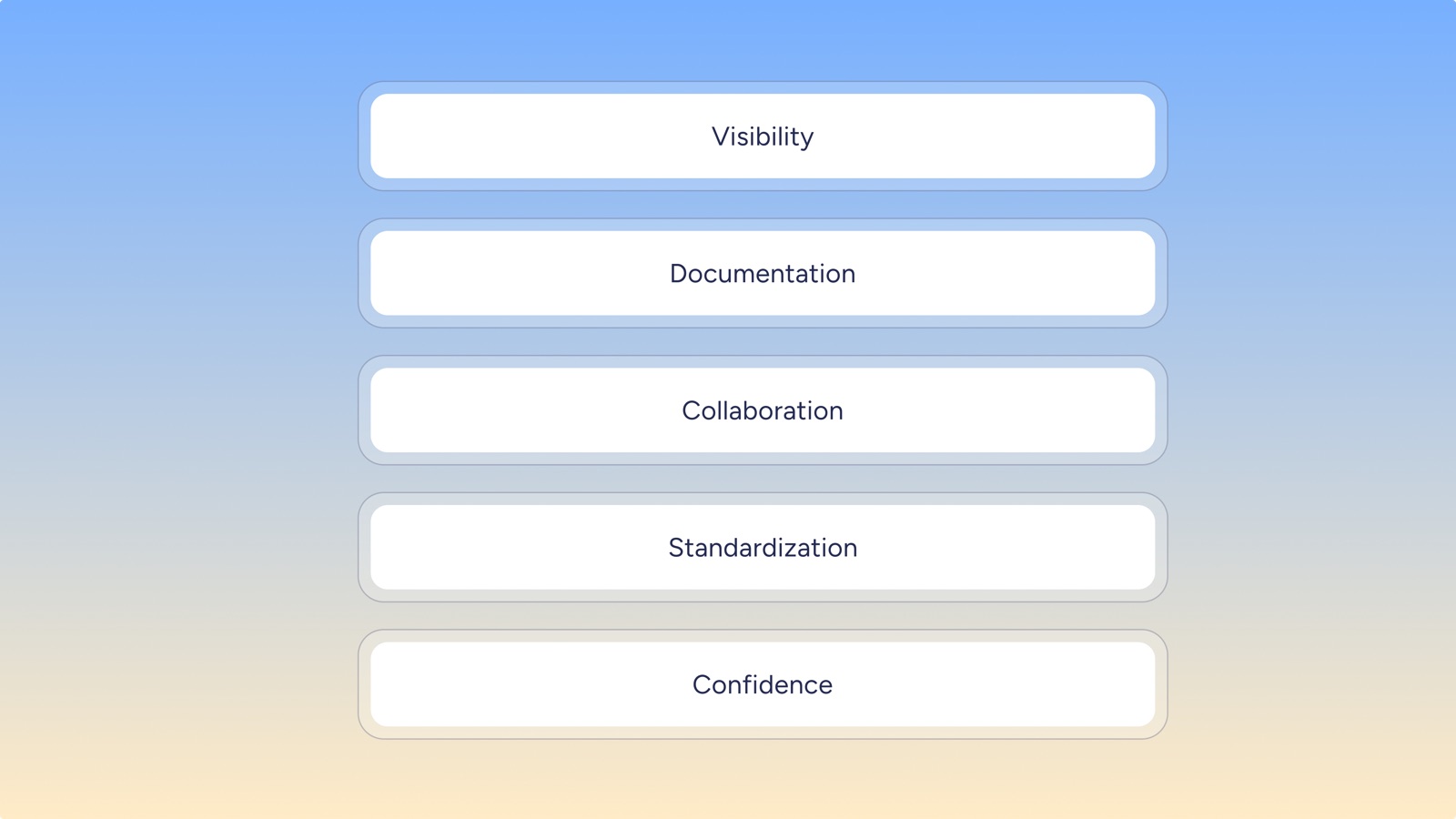
After mapping the entire study lifecycle, I identified five core opportunities:
- Improve Workflow Visibility
- Centralize Documentation
- Simplify Client Collaboration
- Standardize Operational Processes
- Increase Confidence in Delivery
To guide the product strategy, I established four principles:
- Make Complexity Feel Simple
- Guide Users Through the Process
- Create Operational Confidence
- Build a Single Source of Truth
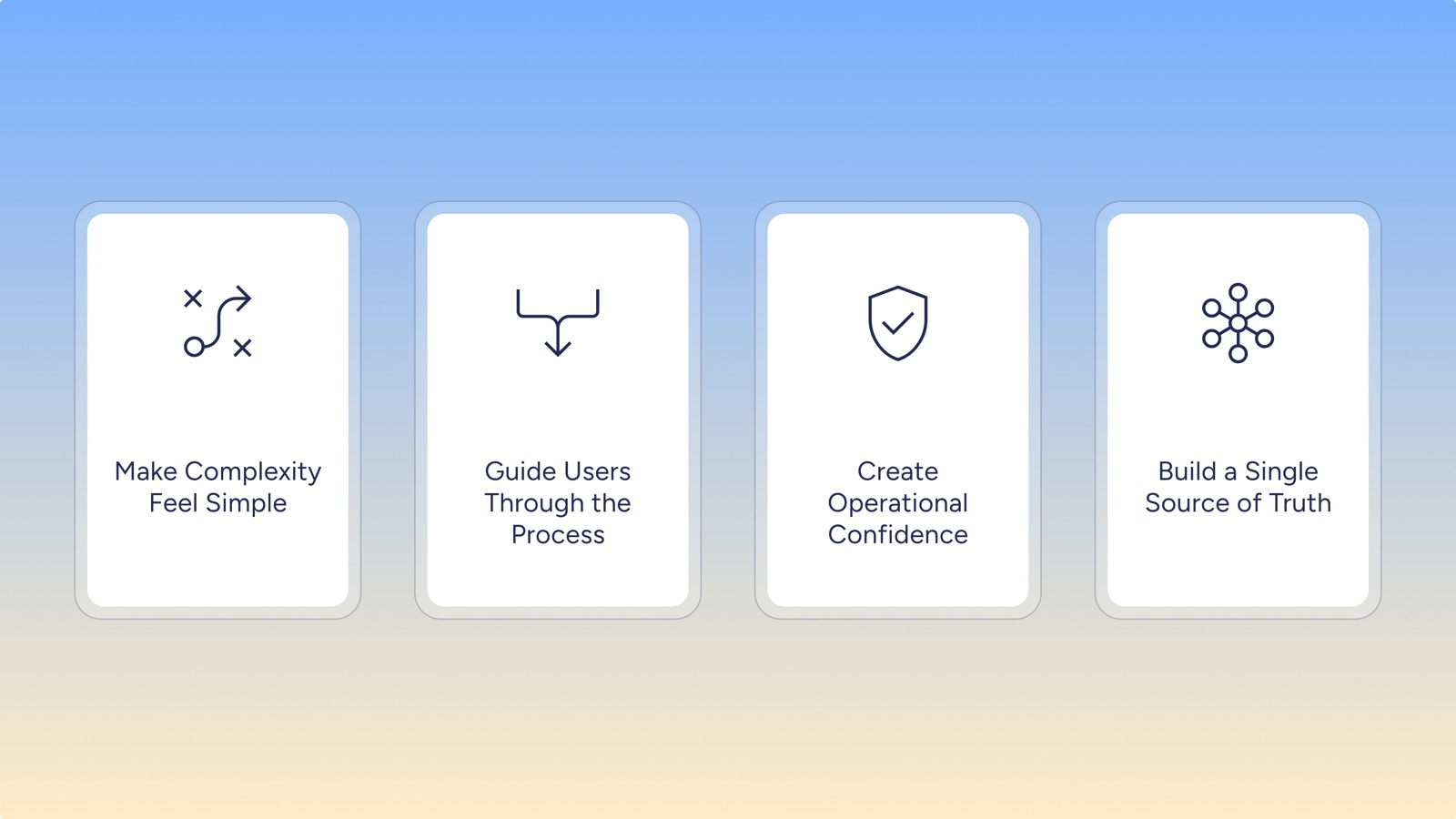
These principles became the foundation for every workflow, screen, and interaction across the platform.
Designing a Single Source of Truth
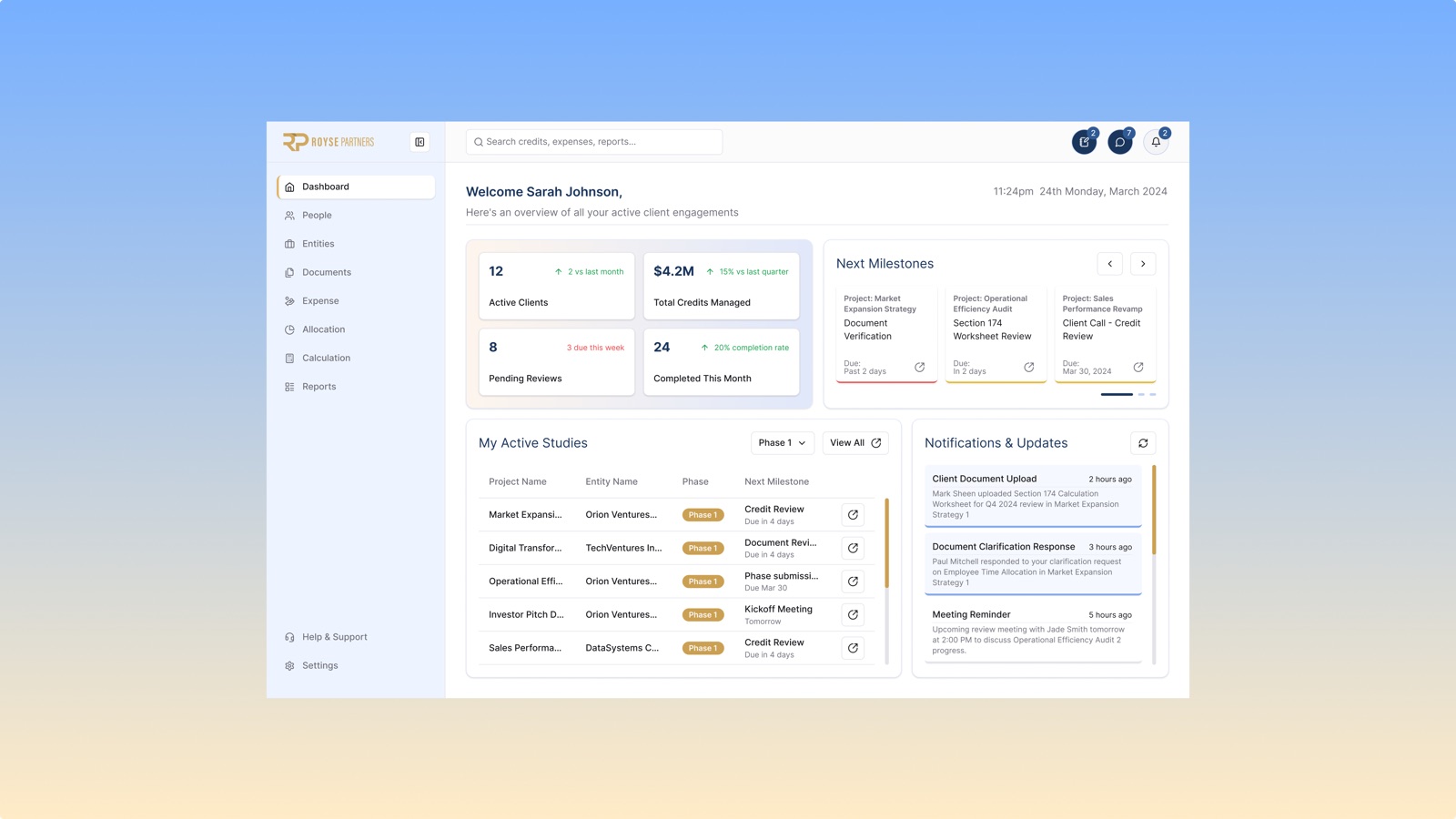
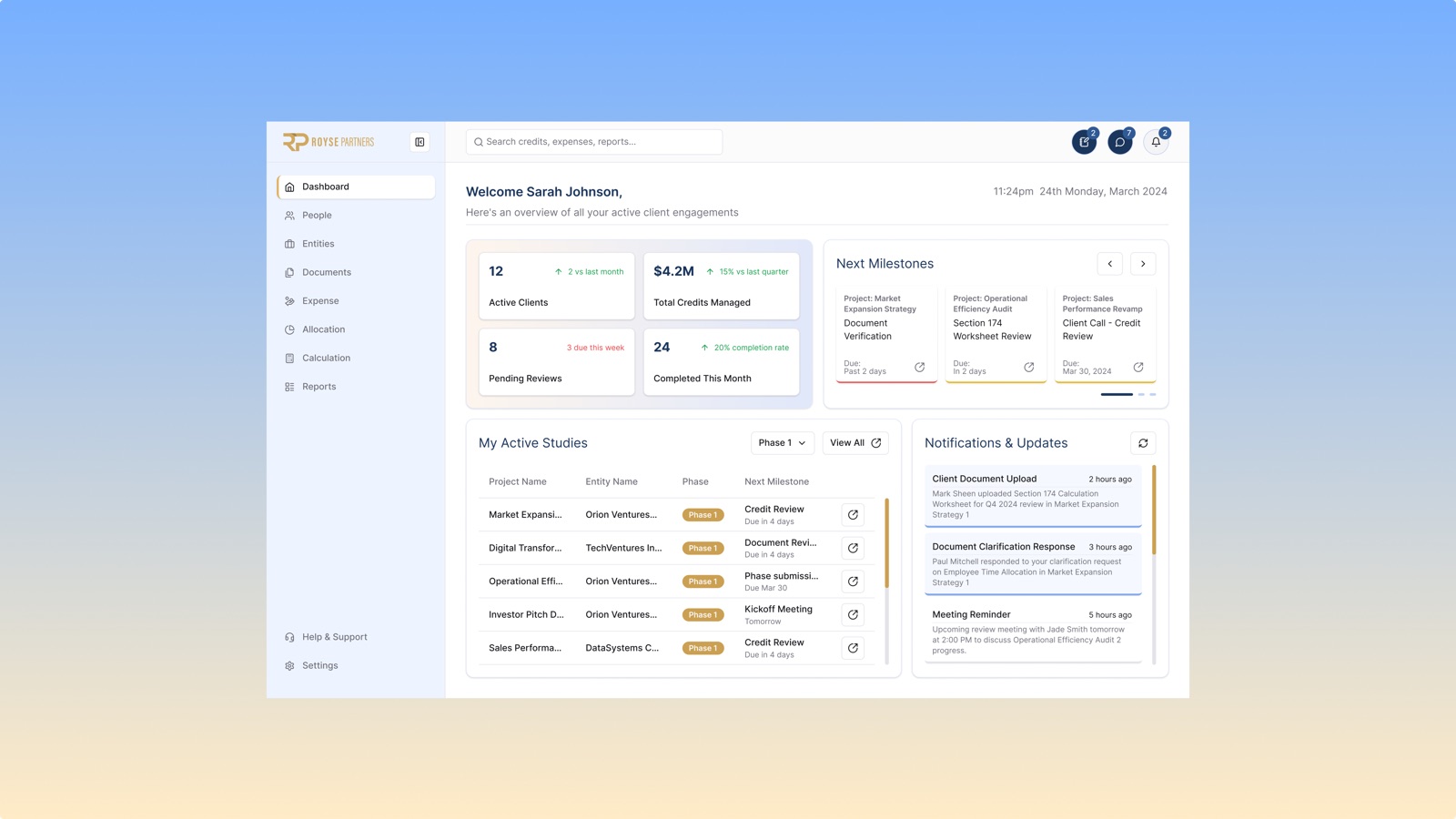
The solution centered around creating a unified operational platform that guides teams through every stage of the R&D Tax Credit lifecycle. Rather than managing engagements across spreadsheets, emails, and folders, users could now operate from a centralized workspace designed around the way they already worked.
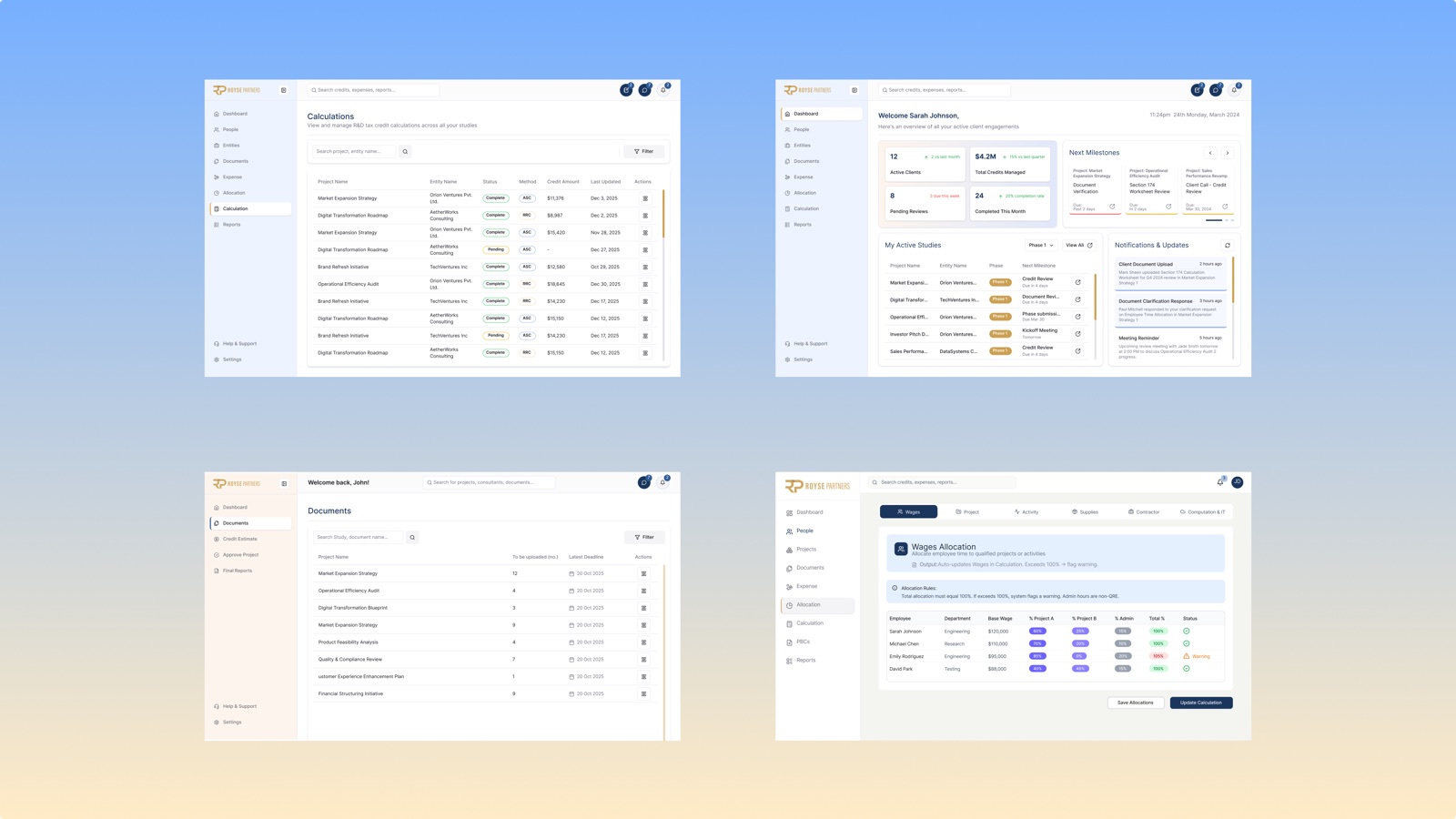
The dashboard became the operational command center.
Users could instantly understand:
- Current engagement stage
- Outstanding tasks
- Upcoming deadlines
- Team ownership
- Engagement health
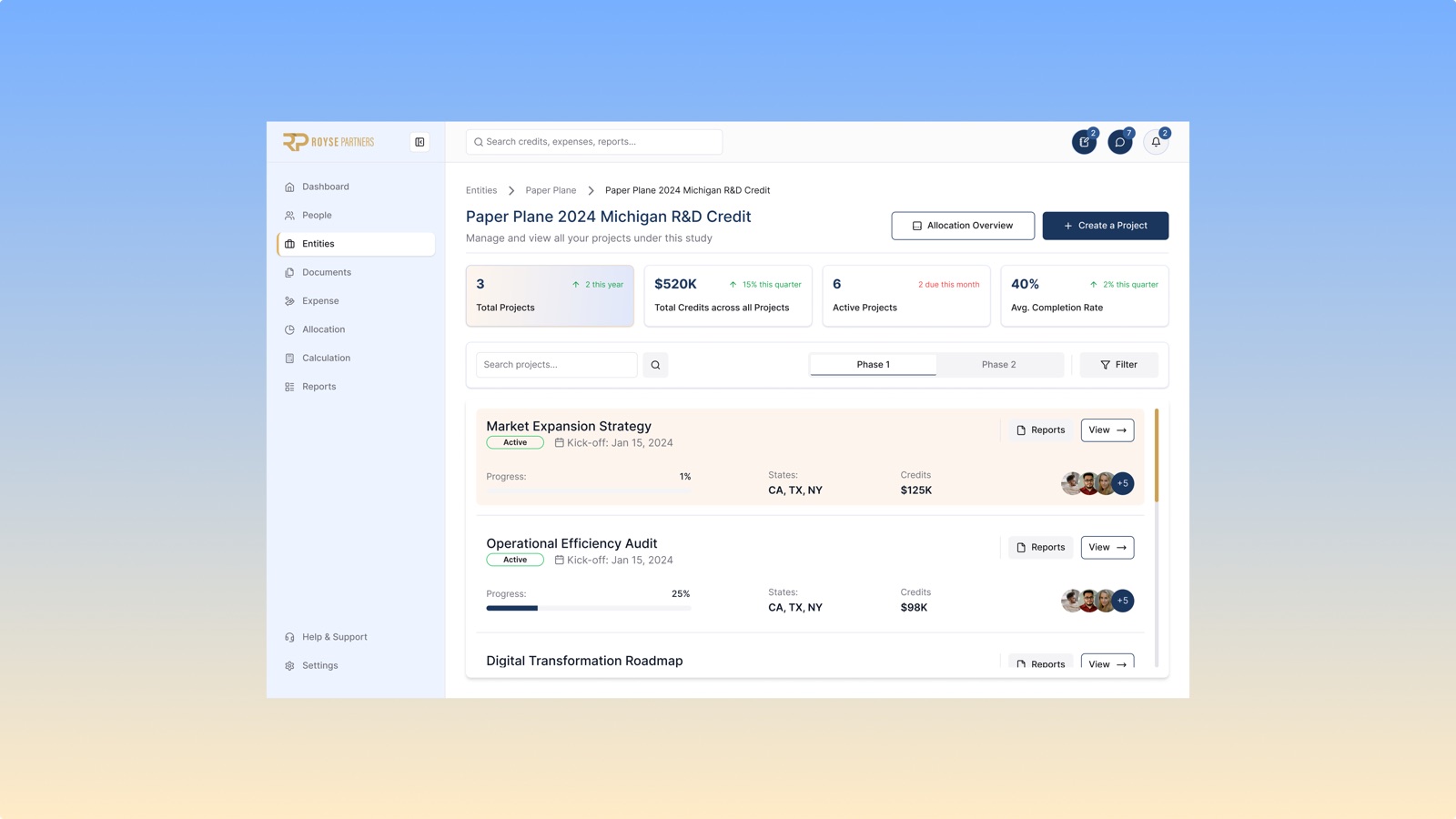
I organized the platform around the actual R&D Tax Credit lifecycle.
Users could clearly see:
- Current stage
- Completed work
- Upcoming actions
- Responsible stakeholders
This transformed a fragmented process into a guided journey.
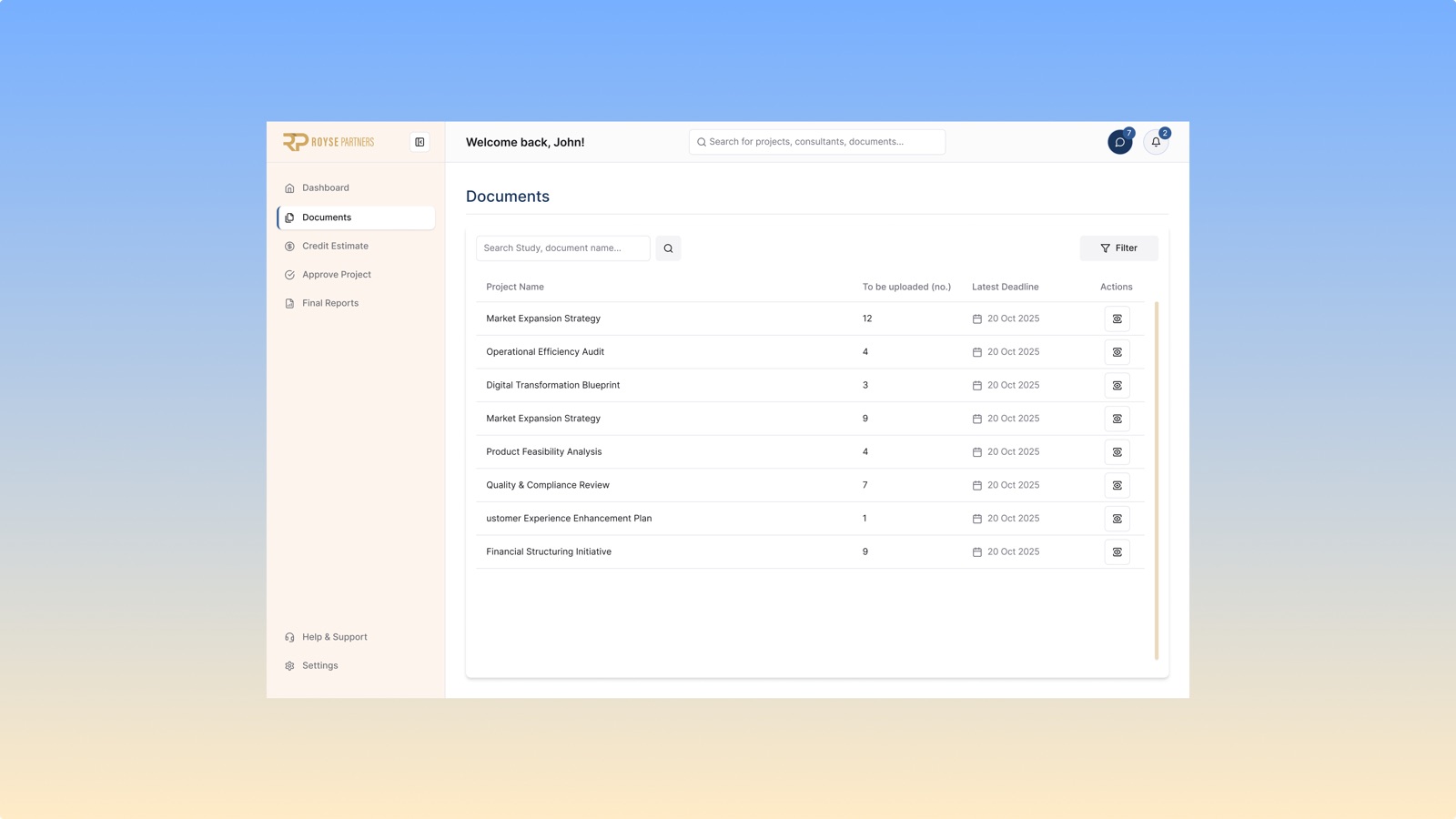
Document collection is one of the most critical parts of an engagement.
I designed a dedicated workspace where clients could:
- View document requests
- Upload files
- Track submissions
- Respond to questions
- Monitor progress
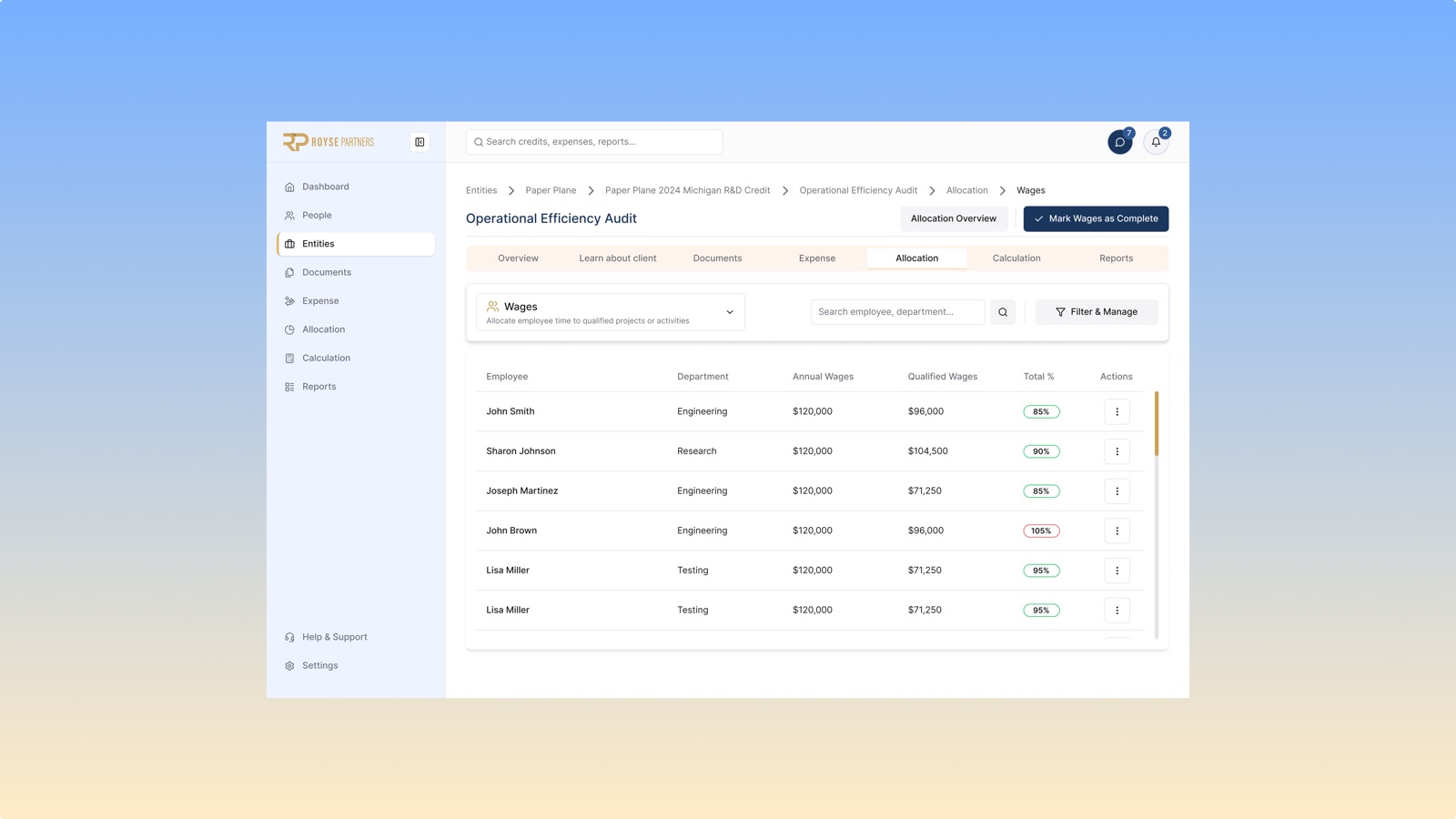
Employee wage allocations play a significant role in determining qualified research expenses.
I designed a dedicated workspace for:
- Employee review
- Allocation management
- Interview documentation
- Supporting notes
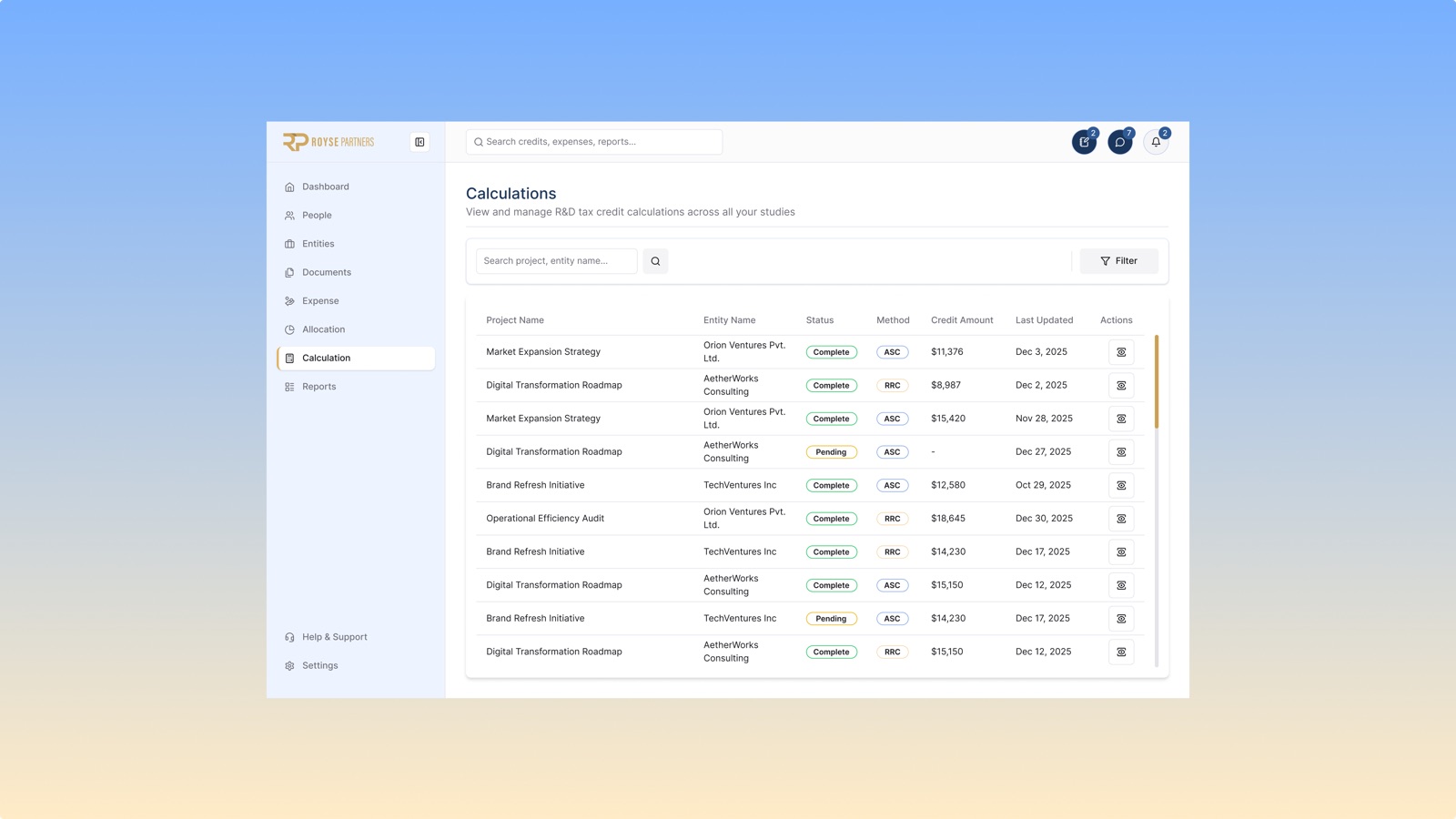
I simplified a complex calculation workflow by presenting:
- Estimated credits
- Method comparisons
- Supporting assumptions
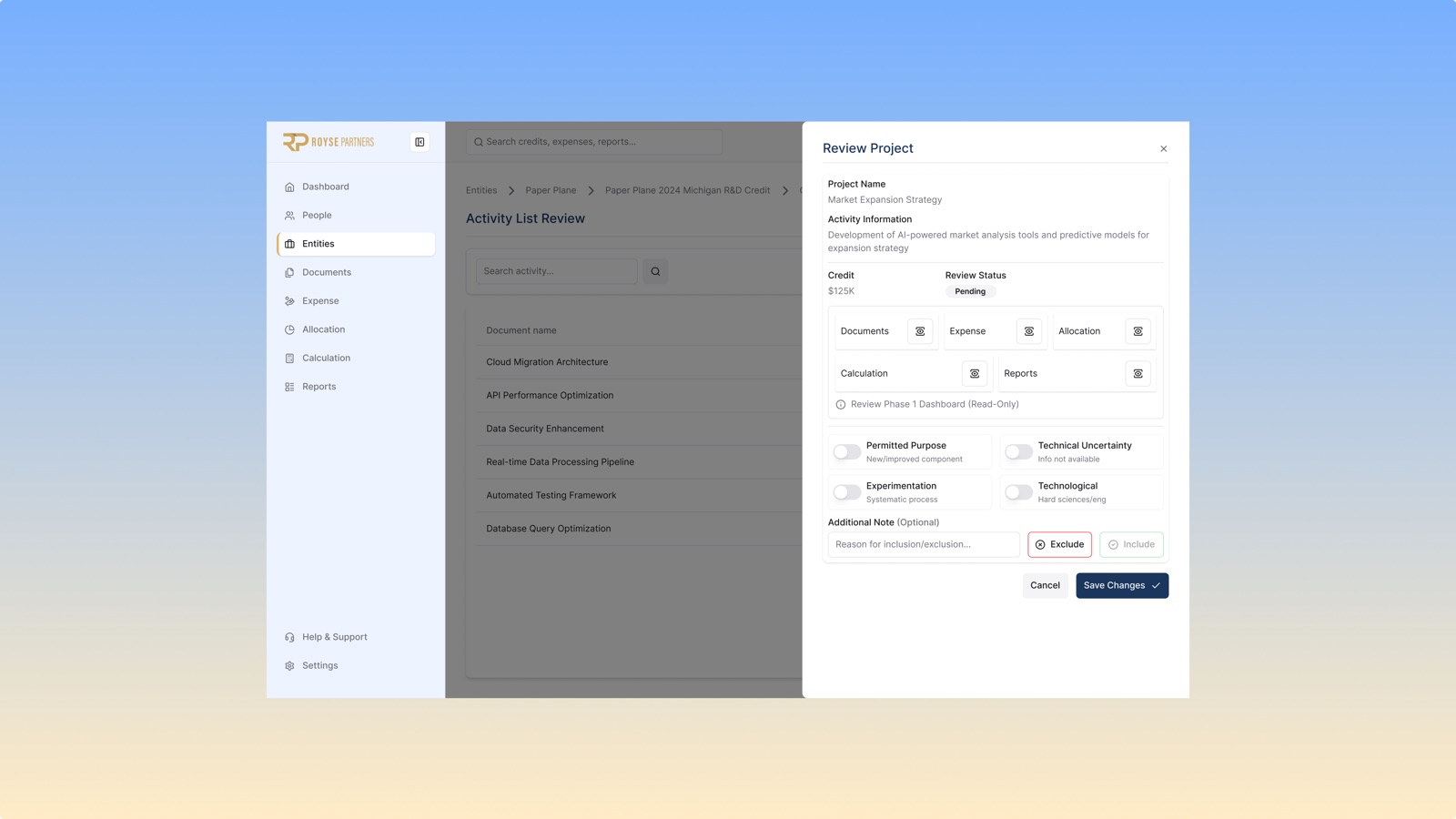
Consultants must determine which projects qualify under IRS guidelines.
I designed a structured evaluation workflow that enabled teams to:
- Review evidence
- Capture rationale
- Organize documentation
- Maintain traceability
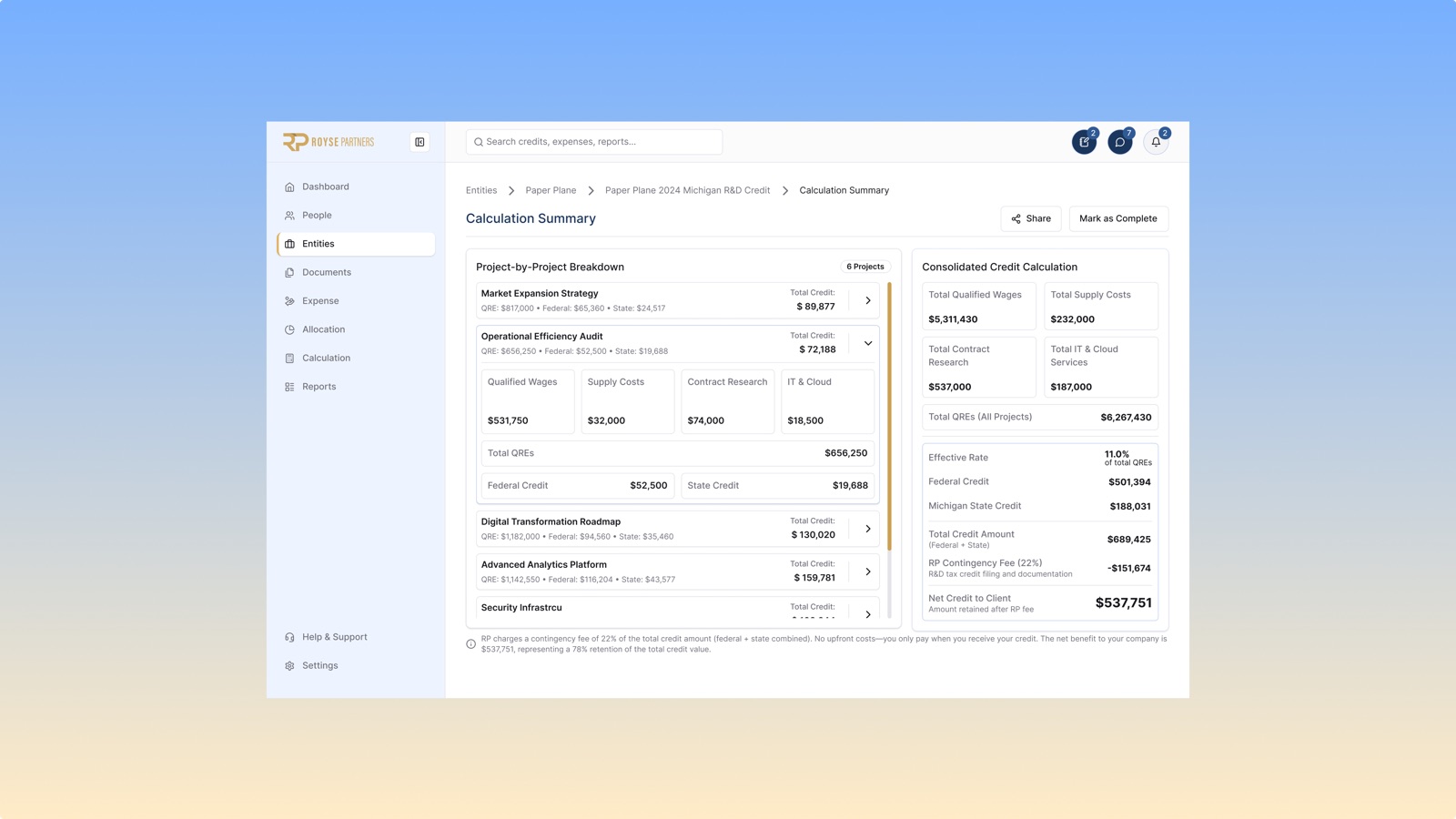
The Quality Control phase is one of the most critical checkpoints in the study lifecycle.
I designed workflows that enabled teams to:
- Validate calculations
- Review evidence
- Resolve issues
- Approve deliverables
The redesign transformed a fragmented operational process into a centralized platform.
- Centralized engagement management into a single operational workspace.
- Reduced reliance on spreadsheets, email threads, and manual tracking.
- Improved visibility across teams, stakeholders, and project stages.
- Increased transparency for clients through structured collaboration workflows.
- Created a scalable foundation for future product growth.
The redesign transformed a fragmented operational process into a centralized platform.
Combine:
- Dashboard
- Client Collaboration
- Operational Workflows
- Calculation & Reporting
Royse taught me that designing enterprise products is rarely about adding more features.
The real challenge is understanding how people work, identifying where complexity creates friction, and transforming that complexity into experiences that feel intuitive and manageable.
Royse reinforced an important lesson for me: the most valuable product experiences don't eliminate complexity, they organize it. Great enterprise design isn't about simplifying the business. It's about simplifying how people interact with it.